Woah, I’m back so soon.
This blog is about getting to the heart of creative work (read more about that here), and yesterday, while sitting in what might sound like a boring Harvard committee meeting, I was struck by a whole lot of creative heart, happening in real time.
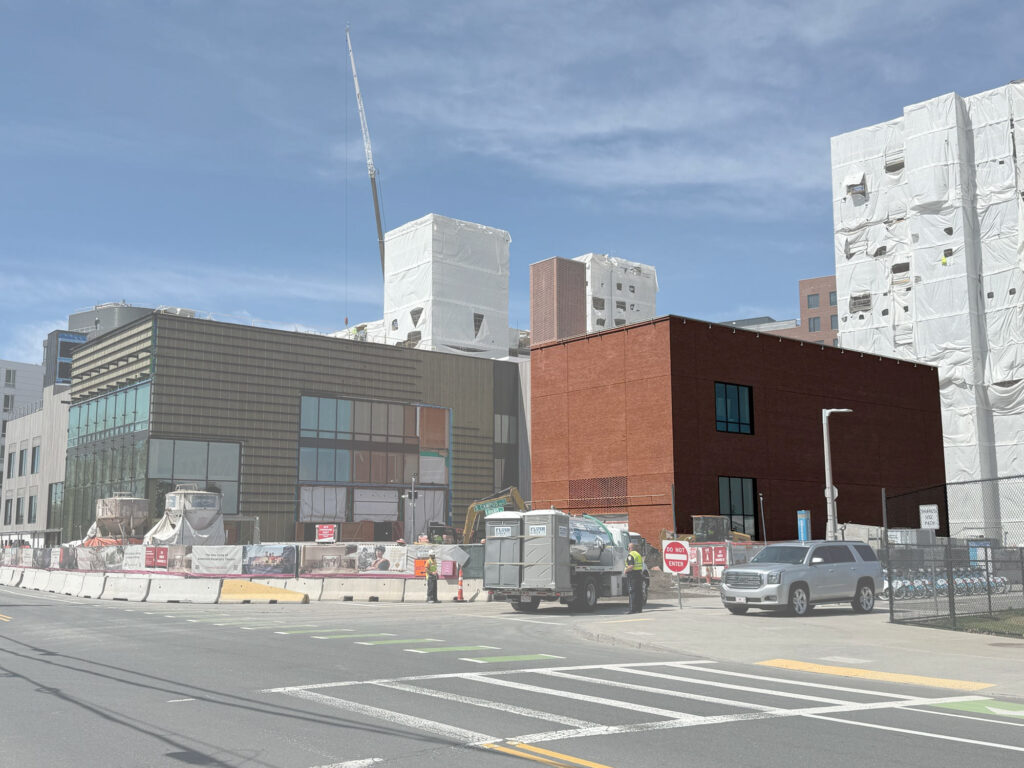
Harvard’s American Repertory Theatre is constructing a new home in Allston Village, and as part of the project, they’ve commissioned a mural from one of the city’s favorite muralists, Rob “Problak” Gibbs. Rob spoke about the project, the process, and his creative inspiration to the university’s public art advisory committee, of which I am part.
During the meeting, it occurred to me that I hadn’t thought very much about murals, beyond respecting them as an art form and how they can add to a city’s vibe and humanity. Rob was right on top of that with his vision, and the resulting semi-final design he showed us (which you will have to just imagine since I can’t share the pic here…) captured a deep and powerful concept: Stories are carried through time by the collective.
The mural was grounded in this idea that we’re all connected through time and shared experience. And the style felt like the true essence of Allston-Brighton — not the sterile, cut-and-paste take on placemaking we see across the city.
That sense of grounding — being connected to the local (and human) experience — isn’t the only part of this A.R.T. project that feels like that. At one point, Dayron Miles, the organization’s associate artistic director, excitedly shared some of the thinking behind the building design itself. He said, maybe hyperbolically, maybe not, that they redesigned the building during the early days of the pandemic ~20 times. They were trying to get at something, and the word he used was “crafted.” They made material choices they wanted to feel worn, to age organically, or even materials that have already aged, like the reclaimed brick from Harvard Square’s iconic “pit,” a historic gathering place in the center of the square.
He said he wanted the building to “feel like paper.”
I understand what he meant. He wanted it to feel familiar, maybe not like home, but something close to that. When he talked this way, I could smell this building, feel its air, and see the light casting through its windows.
Murals aren’t meant for visitors, even though one of their common tasks is brightening anyone’s day. A mural is really meant for the community it belongs to, for the people who will see it hundreds, maybe thousands of times. They become like the familiar faces we see on our commutes, running errands, or visiting a public park. Over time we come to know them.
And the best ones we eventually realize, know us.
Rob said “mural as a mirror” early in the presentation, and I couldn’t put it better.